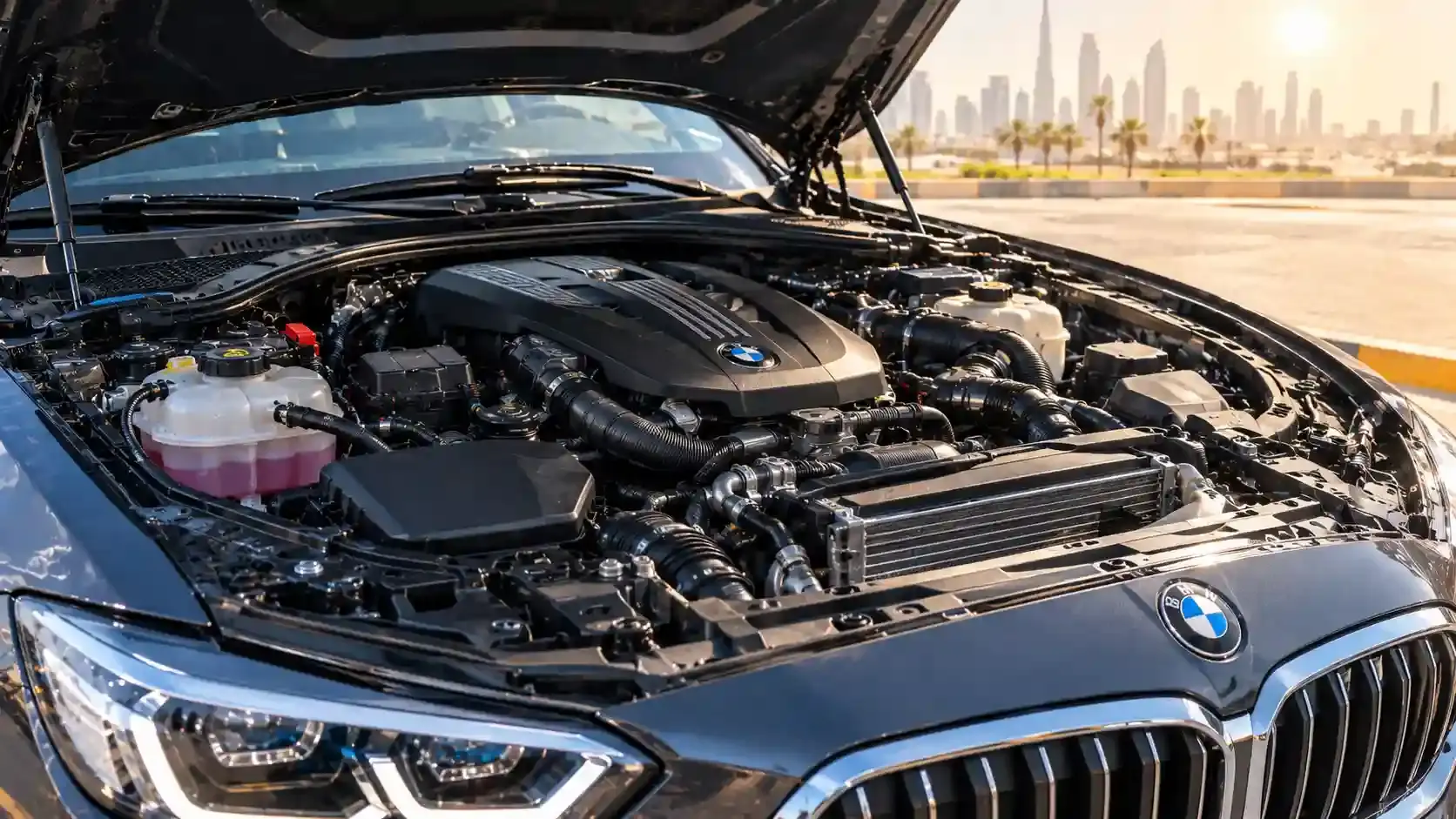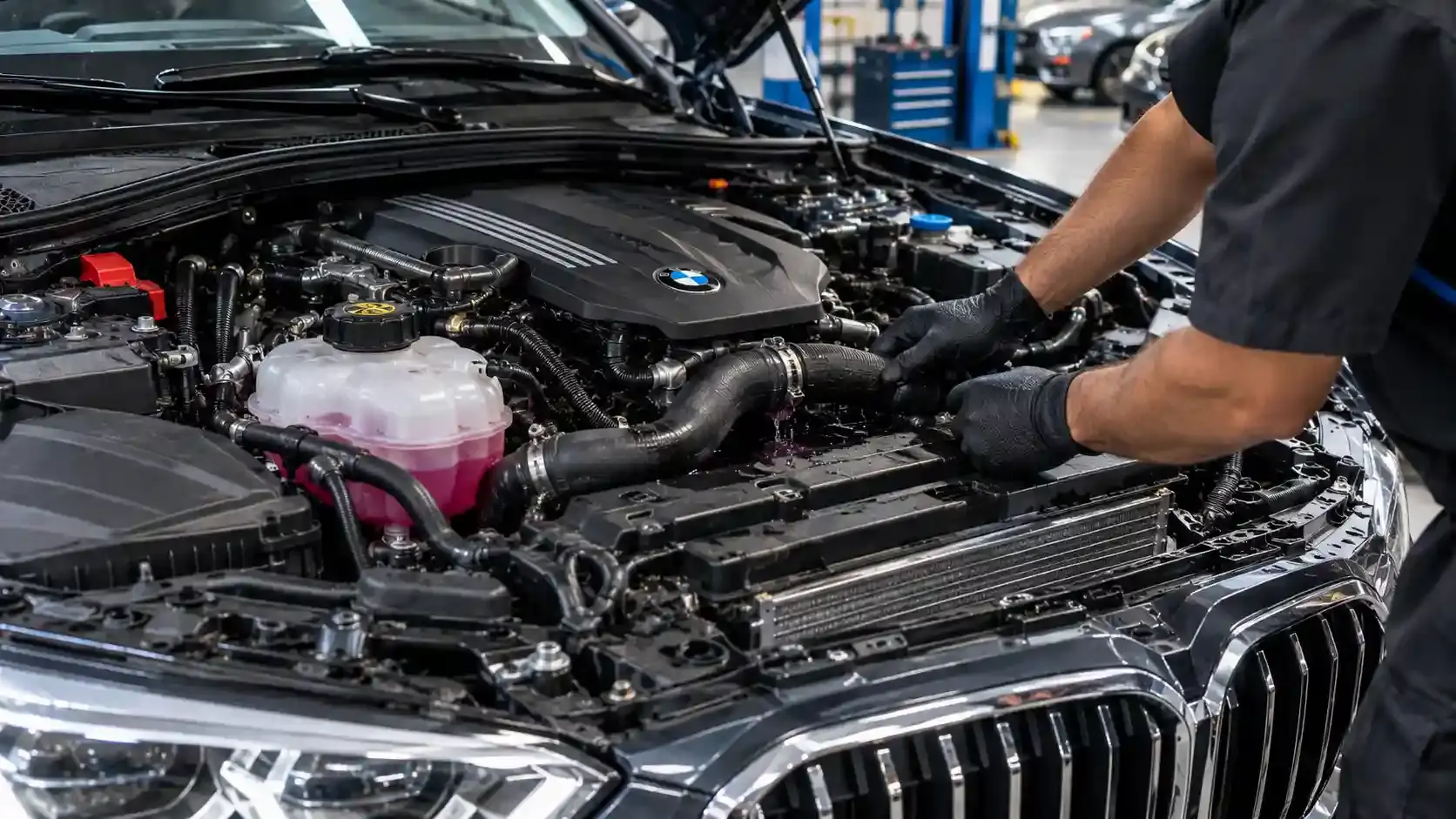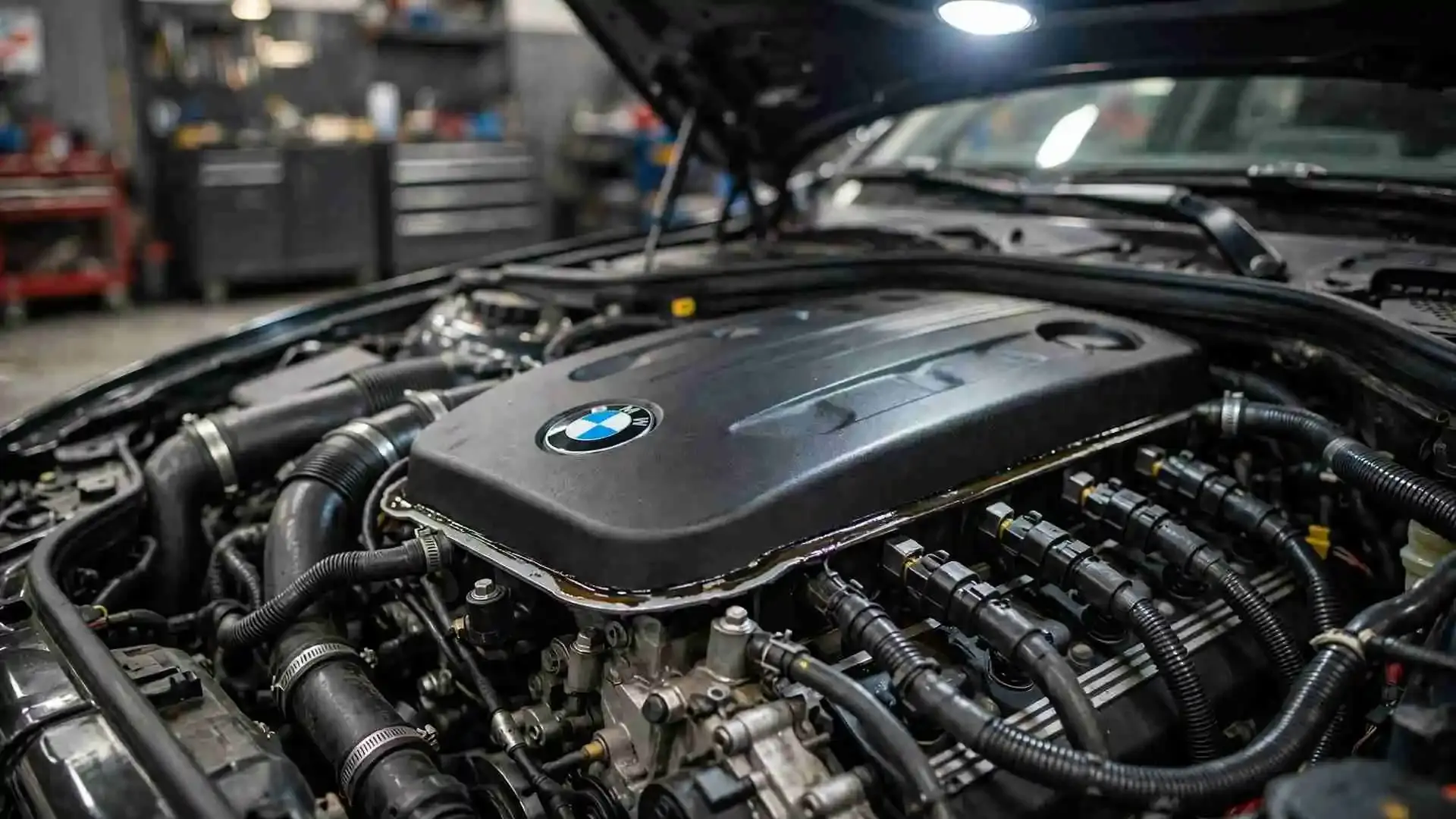
The UAE heat can affect BMW engine performance by raising coolant temperatures, increasing the load on the cooling system, and speeding up the wear of engine oil and rubber seals.
High temperatures can reduce battery life and make the AC system work harder. Turbocharged engines may face extra heat stress, while dusty air filters and radiator surfaces can affect airflow and cooling.
Regular maintenance helps reduce these risks, protect engine parts, and keep your BMW running well throughout the year.
On this page
7 Ways UAE Heat Affects BMW Engines
Several engine systems face extra demands during hot weather. Understanding these effects can help you spot early signs of trouble and arrange repairs before the problem becomes serious.
Increased Risk of Engine Overheating
Engine overheating is one of the main concerns for BMW owners during UAE summers. The radiator removes heat from the coolant, while the water pump moves coolant through the engine.
If the thermostat, radiator fan, or water pump is not working correctly, engine temperature may rise beyond the safe range. Heavy traffic can make the issue worse because there is less airflow through the radiator.
Warning signs include a high-temperature alert, coolant warning, steam, or reduced engine power. If your BMW overheats, stop somewhere safe and switch off the engine. Never open the coolant tank while the engine is hot. Have the cooling system checked before driving again.
Faster Engine Oil Breakdown
Engine oil reduces friction between moving parts and helps carry heat away from key engine areas. In very hot conditions, the oil must continue protecting these parts while the engine runs at high temperatures.
Over time, oil can lose some of its protective properties, especially if it is old, contaminated, or not suitable for the engine. Poor oil condition can increase friction and wear, which may affect engine life and performance.
Follow the oil change schedule recommended for your BMW and use oil that meets the required BMW specification. Check the oil level as advised in the owner's manual. If the level keeps dropping, arrange an inspection to check for leaks or excessive oil use.
Reduced Performance in Extreme Heat
High intake air temperatures can affect how much oxygen enters the engine. Since hot air is less dense than cool air, the engine may have less oxygen available for combustion. Modern BMW engine controls can adjust performance to protect the engine when temperatures become too high.
Turbocharged BMW models may be especially affected because the turbocharger compresses intake air, which increases its temperature. The intercooler helps cool this air before it enters the engine.
If the intercooler is not working well or airflow is restricted, performance may drop. You might notice slower acceleration or reduced power during very hot weather. A workshop can inspect the intake system, intercooler, and engine data to identify the cause.
Shorter Battery Life
High temperatures can speed up chemical reactions inside a car battery and increase internal wear. This can shorten battery life, even if the battery seems to work normally at first.
BMW models rely on the battery to power engine starting, electronic controls, lights, and comfort features. A weak battery may cause slow starting, electrical warnings, or features that stop working properly.
These signs can also point to a charging system fault, so testing is important. A battery health check can measure its condition and help show whether it needs replacement. Keeping battery connections clean and checking the charging system during regular servicing can reduce the risk of unexpected starting problems.
Extra Pressure on the Cooling System
The cooling system has to remove engine heat while dealing with hot air outside the car. Over time, high temperatures can add stress to plastic coolant pipes, expansion tanks, rubber hoses, and seals. Age and normal wear can make these parts brittle, increasing the chance of coolant leaks.
A small leak may not cause an immediate temperature warning, but the coolant level can fall gradually. You may notice a sweet smell, dried coolant marks, or repeated low coolant alerts.
A technician can perform a pressure test to find leaks and inspect the radiator, water pump, thermostat, and hoses. Repairing weak parts early helps prevent overheating and protects the engine from further damage.
Higher AC Load During Summer
BMW air conditioning systems work hard in the UAE because cabin temperatures can rise quickly when a car is parked in direct sunlight. The AC compressor uses engine power in many BMW models, while the condenser releases heat near the radiator.
This adds to the heat that the front cooling system must manage. If the cooling fan is weak, the radiator is blocked, or the AC system has a fault, you may notice poor cabin cooling or rising engine temperatures in traffic.
Check the cabin filter and have the condenser inspected for dust and dirt. If the AC blows warm air or makes unusual noises, arrange an inspection rather than repeatedly running a system that may have a fault.
Faster Wear of Rubber Seals and Gaskets
Engine seals and gaskets stop oil and coolant from escaping. Repeated heating and cooling can cause these parts to harden, shrink, or crack as they age.
In hot climates, worn seals may become more likely to leak, particularly when the engine has high mileage or has not been maintained properly.
Common leak points include the valve cover gasket, oil filter housing gasket, coolant hoses, and expansion tank connections. Look for oil spots, coolant marks, or a burning smell near the engine.
If oil reaches hot exhaust parts, it may produce smoke. A workshop can inspect the engine, identify the leaking seal, and replace damaged parts before low oil or coolant levels lead to more serious problems.
How Can You Protect Your BMW From UAE Heat?
You cannot control the outdoor temperature, but you can reduce the effect it has on your BMW. Regular servicing helps keep the cooling system, engine oil, battery, and AC system in good condition. It is especially important to address small warning signs before summer driving puts more pressure on the car.
Follow these maintenance tips:
- Check coolant levelsFollow the owner's manual and have repeated coolant loss checked for leaks.
- Use the correct engine oilChoose the recommended BMW oil specification and change it on time.
- Inspect the radiatorKeep its outer surface and the AC condenser clear of dirt and debris.
- Test the batteryCheck battery health and charging performance before problems appear.
- Maintain the AC systemInspect filters, cooling performance, and the condenser before summer.
- Watch the temperature gaugeStop safely if the engine overheats or a serious warning appears.
- Follow the service scheduleAsk a trained technician to inspect worn hoses, seals, and cooling parts.
Parking in shade or a covered area when possible can help keep the cabin cooler. However, parking choices do not replace proper engine maintenance.
When Should You Visit a BMW Workshop in Abu Dhabi?
Arrange a professional inspection if your BMW repeatedly runs hot, loses coolant, develops an oil leak, or shows unusual changes in performance. A technician can check the radiator, water pump, thermostat, cooling fan, engine oil, battery, and AC system.
Diagnostic equipment can help identify electronic faults and monitor engine temperature readings. If the engine overheats severely, the oil pressure warning appears, or steam comes from under the bonnet, stop driving as soon as it is safe and arrange roadside assistance.
Continuing to drive may cause damage to the cylinder head, head gasket, or other internal engine parts. Early diagnosis can help reduce repair costs and prevent a small fault from becoming a major engine problem.
Conclusion
UAE heat can affect BMW engine performance by increasing the risk of overheating, speeding up oil wear, placing extra stress on the cooling system, and shortening battery life.
It can make turbocharged engines work harder and increase the demand on the AC system. Heat can also speed up wear in rubber seals and gaskets, leading to oil or coolant leaks.
Regular maintenance, the correct engine oil, a healthy cooling system, and early checks can help protect your BMW throughout the UAE summer.
If you notice rising temperatures, weak AC cooling, fluid leaks, or a drop in engine power, contact BMW Workshop Abu Dhabi for professional BMW diagnostics, engine inspection, and repair services. Get the cause checked early to keep your BMW running safely and smoothly on UAE roads.