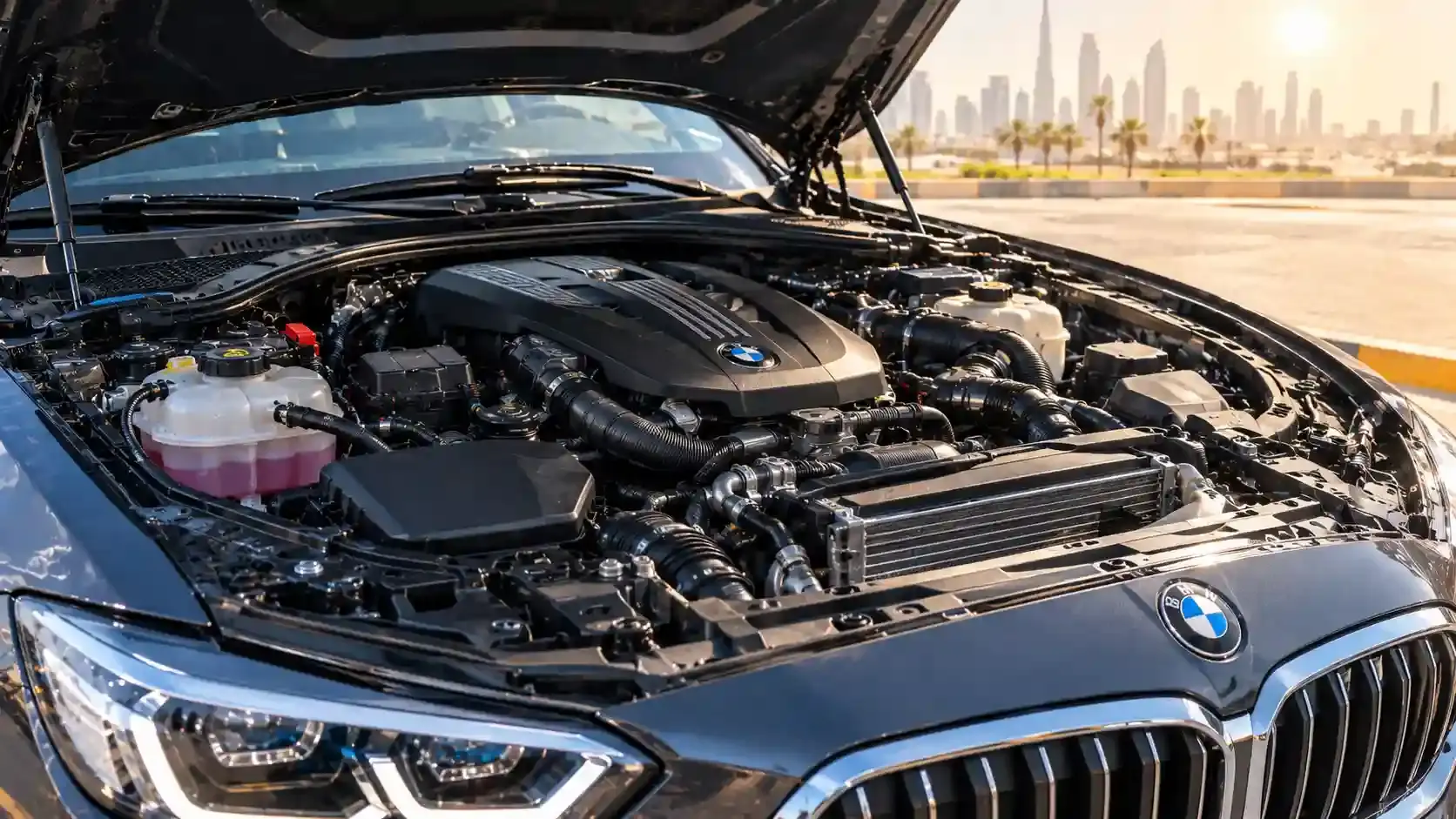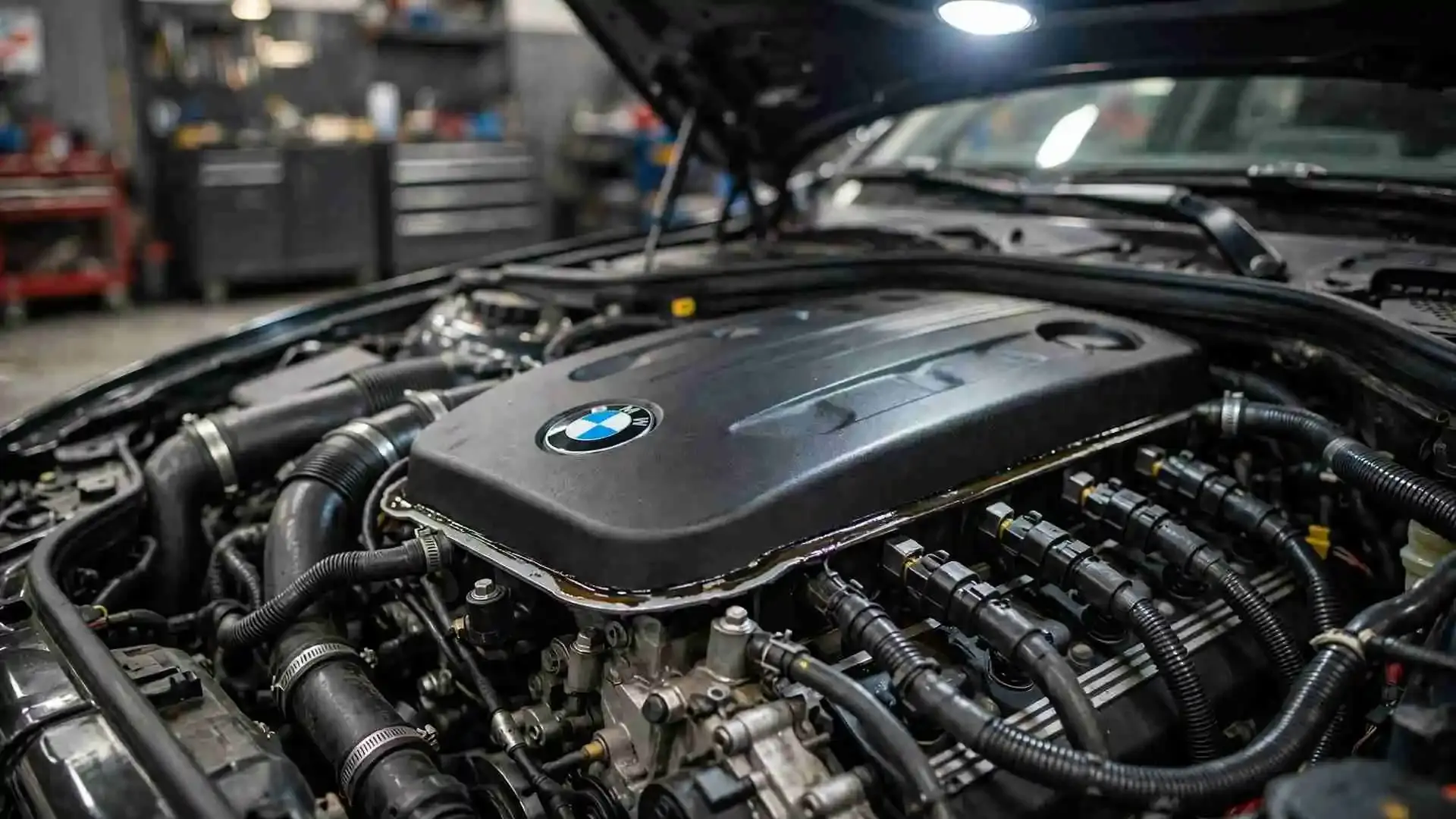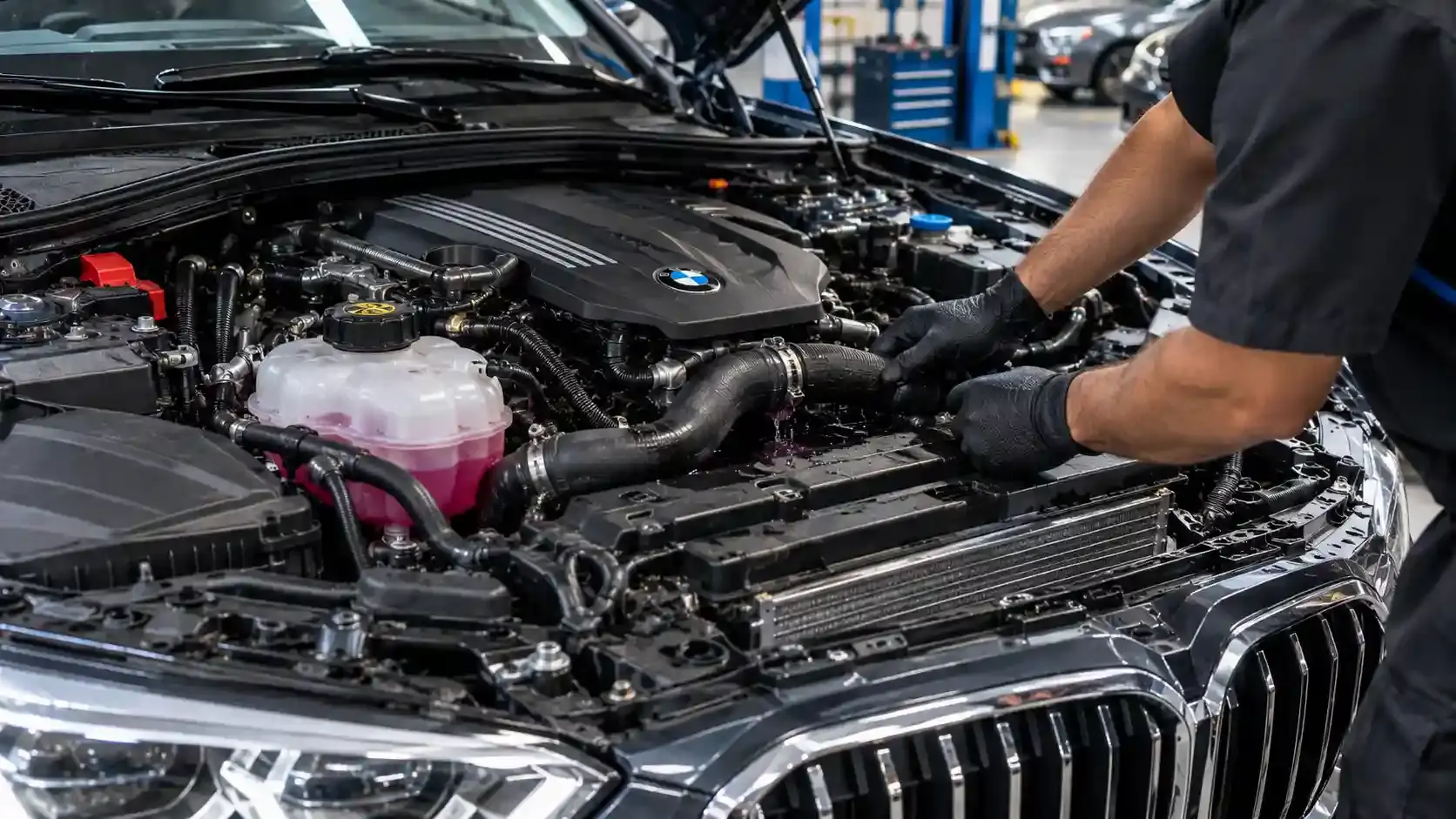
The main reasons a BMW overheats in Abu Dhabi traffic include low coolant, a leaking cooling system, a faulty water pump, and a damaged thermostat. A radiator blockage or cooling fan failure can reduce the engine's ability to release heat.
Heavy AC use, high outdoor temperatures, and long periods of stop-and-go driving can make an existing cooling problem more noticeable. Finding the cause early can help prevent serious engine damage and costly repairs.
On this page
Why Does a BMW Overheat in Abu Dhabi Traffic?
BMW engines produce heat during normal driving, and the cooling system keeps the temperature within the correct range. When the car moves at higher speeds, air passes through the radiator and helps remove heat.
In slow traffic, there is less natural airflow, so the radiator fan must do more work. If a cooling part is weak or damaged, the engine temperature may rise while the car is standing still.
Abu Dhabi's hot weather adds to this challenge. However, a healthy BMW should still be able to manage normal traffic conditions. Repeated overheating usually means the cooling system needs inspection rather than being a problem caused by weather alone.
7 Common Reasons Your BMW Overheats in Traffic
Several parts work together to control engine temperature. A fault in even one of them can affect the whole system. These are seven possible causes to check if your BMW gets hot while driving through Abu Dhabi.
Low Coolant or a Coolant Leak
Coolant carries heat away from the engine and transfers it to the radiator. If the coolant level drops, the system may not remove enough heat, especially when the car is stuck in traffic.
Leaks can develop in radiator hoses, plastic pipes, the coolant expansion tank, seals, or the water pump. You may notice a low coolant warning, a sweet smell near the bonnet, or coloured fluid under the car. Check the coolant level only when the engine is completely cool.
Never open the expansion tank cap while the system is hot because pressurised coolant can cause burns. A workshop can carry out a pressure test to find hidden leaks.
A Faulty Electric Water Pump
Many BMW models use an electric water pump to move coolant through the engine and radiator. If the pump becomes weak or stops working, coolant circulation may drop, allowing engine temperature to rise.
Some BMW engines use different cooling designs, so the exact pump type depends on the model and engine. Warning signs can include sudden overheating, a coolant temperature warning, or reduced engine power.
A diagnostic scan may reveal a pump-related fault code, but the code should be checked alongside other test results. Replacing the pump without confirming the fault can waste money. A technician should test the pump and inspect the cooling system before deciding on the repair.
A Stuck Thermostat
The thermostat controls coolant flow based on engine temperature. When the engine gets hot, the thermostat should open to let coolant move through the radiator. If it sticks closed or fails to work correctly, heat can build up inside the engine, even when the coolant level is normal.
A faulty thermostat may cause the temperature to rise, fluctuate, or reach the warning level during slow driving.
A technician can compare engine temperature readings and check coolant flow to identify the problem. The thermostat should be tested before replacement. Continuing to drive with a faulty thermostat can lead to severe overheating and damage to engine parts.
A Blocked or Damaged Radiator
The radiator releases heat from the coolant into the surrounding air. Dust, sand, dirt, and debris can collect on its outer surface and restrict airflow. Internal blockages can reduce coolant flow through the radiator.
In either case, the engine may struggle to stay cool when traffic moves slowly. Look for repeated temperature rises, coolant loss, or signs of a leak. The radiator fan, hoses, and radiator core should be checked as part of the inspection.
A technician may test temperature differences across the radiator to see whether heat is being removed properly. Cleaning or repairing the radiator may solve the issue, but a badly damaged unit may need replacement.
A Cooling Fan That Is Not Working
The cooling fan pulls or pushes air through the radiator when natural airflow is limited. This makes it especially important when your BMW is waiting at traffic lights or moving slowly through busy roads.
If the fan motor, fuse, wiring, or control unit fails, the radiator may not receive enough airflow to cool the engine. One common clue is that the temperature rises while the car is stationary but drops when you start driving faster.
This pattern does not prove the fan is faulty, but it helps narrow down the possible cause. A workshop can check fan operation, electrical connections, and control signals to find the fault.
Heavy AC Use and Restricted Airflow
Air conditioning is important in Abu Dhabi, but it adds heat to the cooling system because the AC condenser releases heat near the radiator.
When outdoor temperatures are high, the system has to work harder to keep the cabin cool. If the radiator is dirty or the cooling fan is weak, the extra heat may make an existing problem more obvious.
If your BMW starts getting hotter when the AC is running, have both the engine cooling system and AC system checked. A technician can inspect the condenser, radiator, fan, and refrigerant system.
Do not assume that turning off the AC will fix the underlying issue. It may reduce the load temporarily, but a faulty cooling part still needs repair.
A Faulty Temperature Sensor or Cooling Control System
BMW uses electronic sensors and control units to monitor engine temperature and manage cooling. If the coolant temperature sensor sends incorrect readings, the dashboard may show a warning that does not match the actual temperature.
In other cases, a control fault may prevent the cooling fan or water pump from working as expected. A warning light should never be dismissed as a sensor problem without testing.
A technician can read diagnostic trouble codes, compare live temperature data, and test the related electrical parts. This helps separate a sensor fault from real overheating. Correct diagnosis is important because replacing a sensor will not solve the problem if the engine is genuinely running too hot.
What Should You Do If Your BMW Overheats in Traffic?
If your BMW shows a high-temperature warning, do not keep driving and hope the temperature will drop. Find a safe place to stop, switch off the engine, and follow the warning instructions in your owner's manual. If there is steam, a strong coolant smell, or a serious warning, stay clear of the engine bay and arrange roadside assistance.
Keep these safety steps in mind:
- Switch off the engine once you have stopped safely.
- Do not open the coolant expansion tank while the engine is hot.
- Do not pour cold water over a hot engine.
- Do not continue driving if the warning remains or returns.
- Arrange a professional inspection before driving again if overheating has occurred.
Severe overheating can damage the cylinder head gasket, warp the cylinder head, or cause internal engine wear. Stopping early can help limit the damage.
How Can You Prevent BMW Overheating in Abu Dhabi?
Regular maintenance can reduce the risk of overheating during daily commutes. Check your BMW's service schedule and pay attention to any coolant warnings or changes in temperature. The right maintenance plan depends on the model, engine, age, and mileage.
Before the hottest months, ask a workshop to inspect the radiator, coolant hoses, expansion tank, thermostat, water pump, and cooling fan. Use the correct BMW-approved coolant specification and mixing ratio for your model. Do not mix random coolant types or rely on water alone as a long-term solution.
It is equally important to fix small leaks early and keep the radiator and AC condenser free from dirt. If the car has overheated before, have the cause confirmed rather than simply topping up coolant and continuing to drive.
When Should You Visit a BMW Workshop in Abu Dhabi?
Book an inspection if the temperature rises repeatedly, coolant levels keep dropping, the AC makes the engine temperature climb, or a coolant warning appears. If the engine overheats severely, stop driving and arrange recovery instead of risking further damage.
A professional BMW workshop can carry out a cooling system pressure test, inspect the radiator and hoses, test the water pump and thermostat, and scan the engine control unit for fault codes. These checks help identify the actual cause and prevent unnecessary part replacement.
Conclusion
A BMW may overheat in Abu Dhabi traffic because of low coolant, a faulty water pump, a stuck thermostat, a blocked radiator, a failed cooling fan, heavy AC load, or an electronic fault. High outdoor temperatures and slow traffic can make these problems easier to notice, but repeated overheating should never be treated as normal.
Check warning signs early, keep up with regular servicing, and avoid driving when the engine temperature becomes unsafe. If your BMW is overheating, contact BMW Workshop Abu Dhabi for professional cooling system checks, BMW diagnostics, and engine repair services. Getting the fault diagnosed early can help protect your engine and keep your car ready for UAE roads.