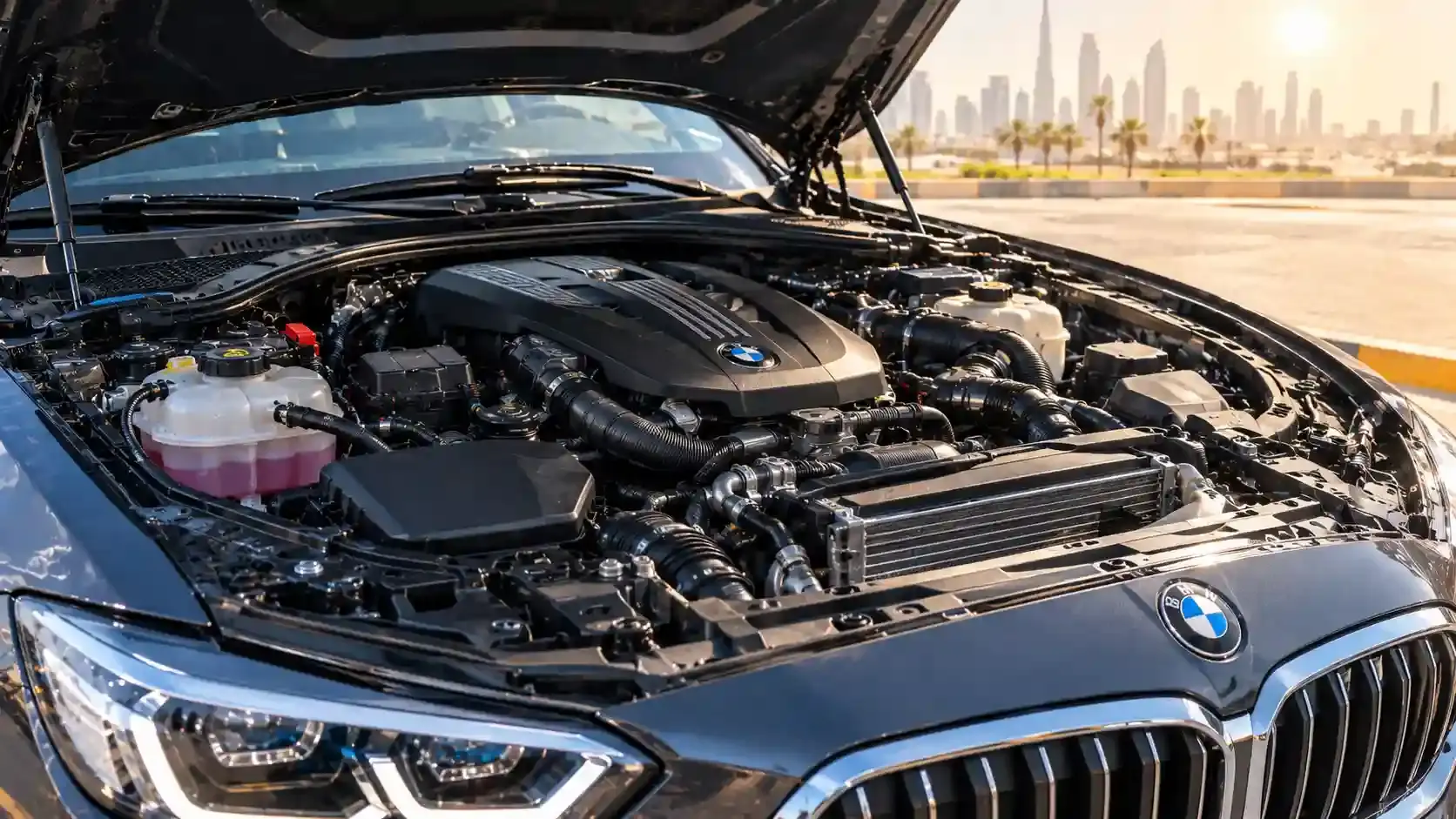
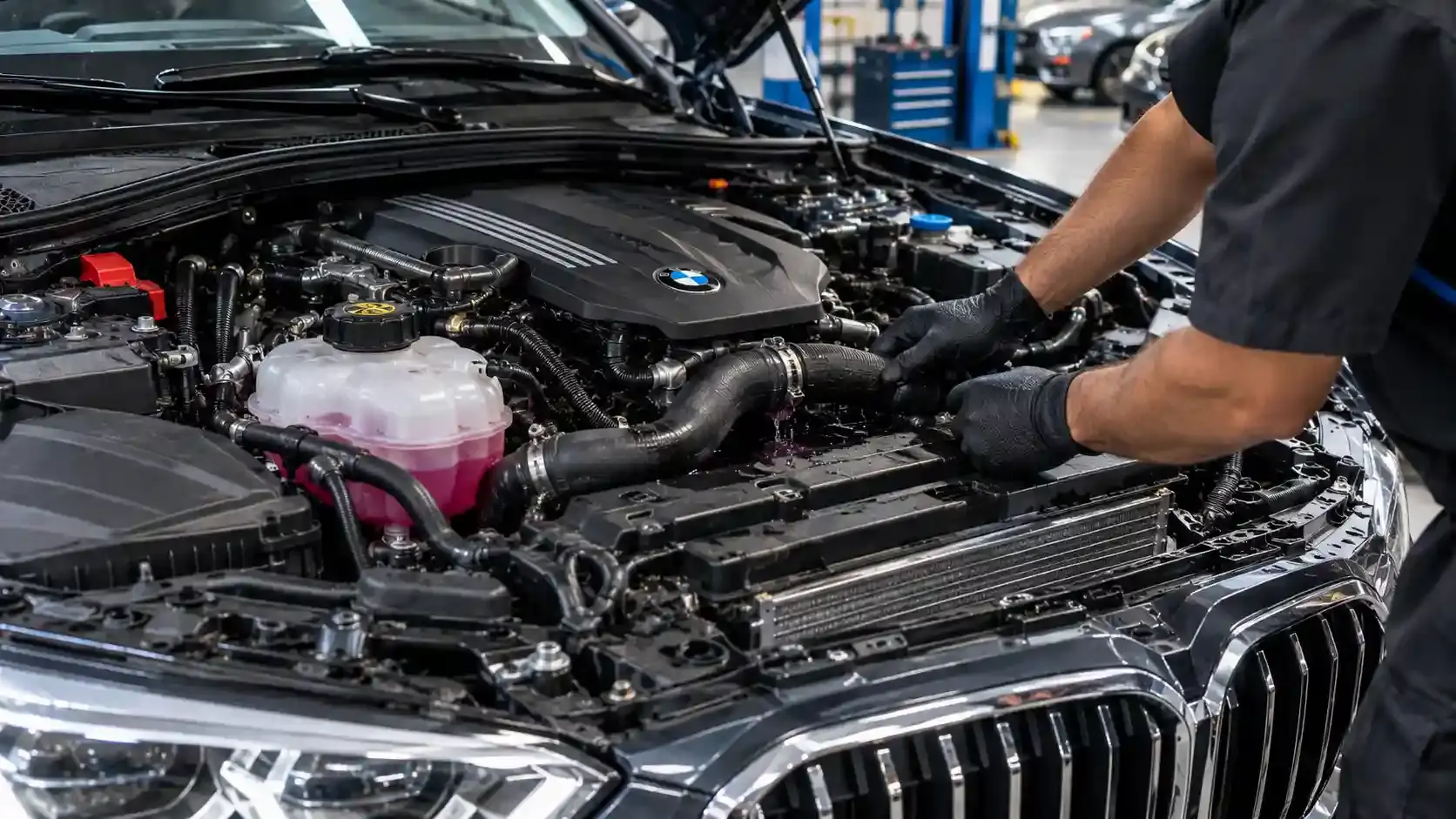
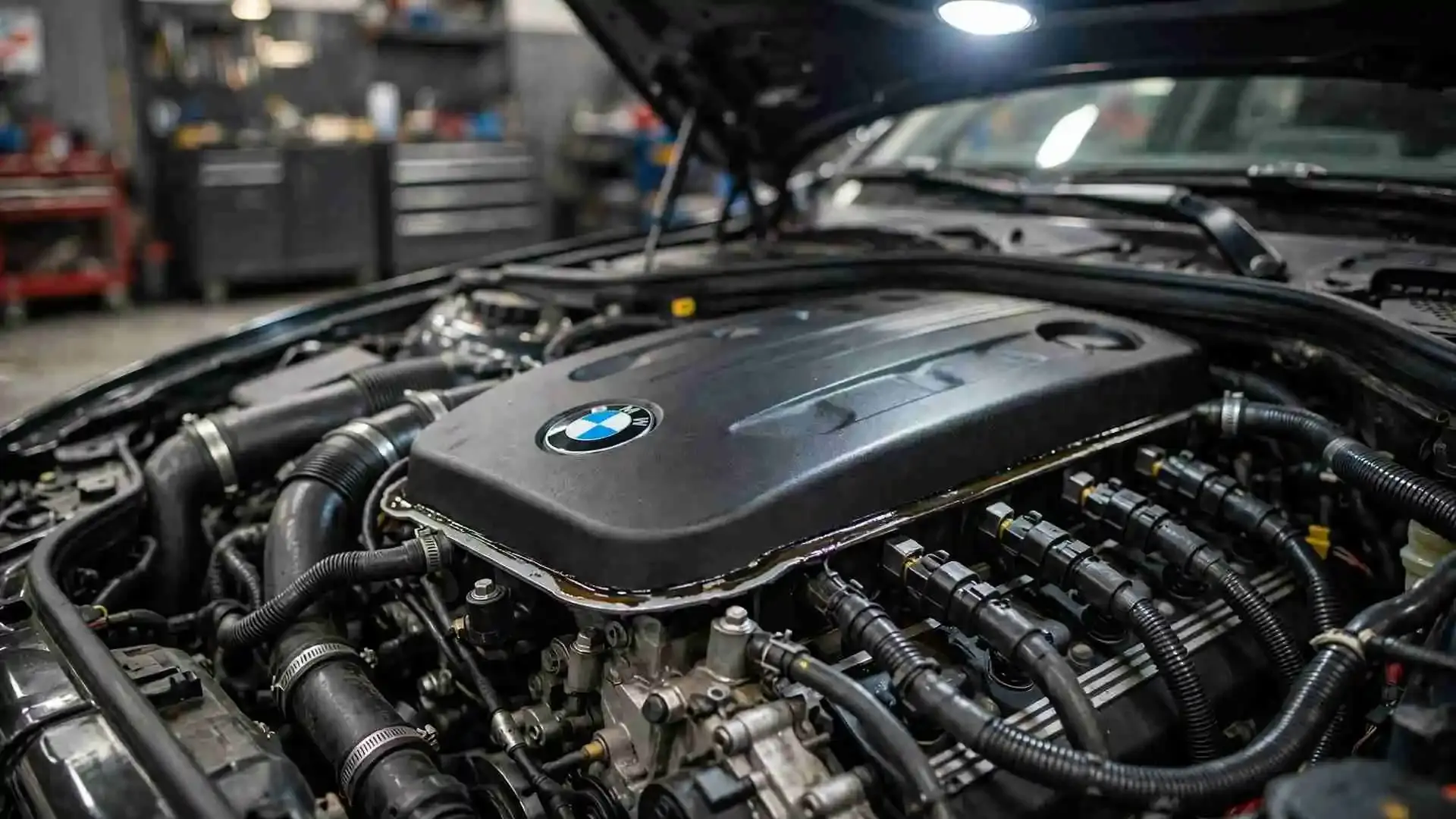
Common causes of BMW engine oil leaks include worn valve cover gaskets, damaged oil filter housing gaskets, leaking oil pan gaskets, and loose or damaged seals.
High engine temperatures in the UAE can put extra stress on rubber parts, while age and normal wear can make seals less effective. Poor repairs or damaged parts may cause leaks as well.
Finding the source early can help prevent low oil levels, engine damage, and costly repairs.
On this page
What Causes Oil Leaks in BMW Engines?
BMW engines have several seals and gaskets that stop oil from escaping. Over time, these parts can become hard, cracked, or weak. Heat from the engine can speed up this process, especially when the car is often driven in hot weather or heavy traffic. A loose filter, damaged oil line, or poorly fitted part can cause the same problem.
The leak may start as a few drops and become worse as the seal continues to fail. Oil can spread across the engine, making the source hard to find by sight alone. A proper inspection helps identify the exact leak point before parts are replaced.
8 Common Causes of BMW Engine Oil Leaks
Different BMW models use different engine designs, so the parts that may leak can vary. However, several areas are worth checking when oil appears under the car or around the engine.
Worn Valve Cover Gasket
The valve cover sits on top of the engine and protects parts such as the camshafts. A gasket forms a seal between the cover and the cylinder head to keep engine oil inside. As the gasket ages, engine heat can make the material hard or brittle, allowing oil to escape.
A leak may leave oily marks around the top of the engine. In some cases, oil can reach hot exhaust parts and create a burning smell or light smoke. A technician should inspect the valve cover and gasket for damage. Replacing the worn gasket and checking the cover for cracks can stop the leak and help protect nearby parts.
Leaking Oil Filter Housing Gasket
The oil filter housing holds the engine oil filter and connects it to the lubrication system. A gasket seals the housing against the engine. If this gasket wears out, oil may leak around the housing and spread across nearby engine parts.
This type of leak needs attention because oil can reach the drive belt area on some BMW engines. Oil-soaked belts may weaken and create further problems if left unchecked. A technician can clean the area, check where the oil is coming from, and replace the damaged gasket. The housing itself should be checked for cracks or damage before the repair is completed.
Damaged Oil Pan Gasket
The oil pan sits at the bottom of the engine and stores the engine oil. Its gasket seals the pan against the engine block. Over time, the gasket may wear out, harden, or lose its ability to seal properly. Damage from road debris or an earlier repair can cause leaks too.
A damaged oil pan gasket may leave oil drops under the front or middle of the car. However, oil can travel down from higher parts, so the location of the puddle does not always reveal the source. A workshop can inspect the lower engine, clean away old oil, and confirm the leak before replacing the gasket.
Worn Crankshaft or Camshaft Seals
Crankshaft and camshaft seals help keep engine oil inside the engine where rotating shafts pass through the engine housing. These seals work under heat and constant movement. As they age, the rubber material may lose its shape and allow oil to escape.
A leaking crankshaft seal may leave oil near the front or rear of the engine, depending on which seal has failed. A camshaft seal leak may cause oil to collect around the upper engine area. These repairs can take more time because some nearby parts may need to be removed. A technician should identify the failed seal before starting the repair.
Excess Pressure in the Crankcase
The crankcase is the area inside the engine that holds the crankshaft and related parts. The crankcase ventilation system, often called the PCV system, helps control pressure and direct engine gases back into the intake system. If this system becomes blocked or fails, pressure may build up inside the engine.
Extra pressure can force oil past seals and gaskets that would otherwise hold. Signs may include repeated oil leaks, rough idling, or unusual oil use. A technician can test the crankcase ventilation system and measure pressure to find the cause. Replacing a gasket alone may not solve the problem if excess pressure remains.
Loose Drain Plug or Oil Filter
An oil leak can happen after an oil change if the drain plug is loose, its sealing washer is damaged, or the oil filter is not fitted correctly. Using the wrong filter or a damaged seal can cause oil to escape as well.
You may notice fresh oil under the engine soon after a service. If the leak is large, the engine oil level can fall quickly. Check the oil warning lights and follow the instructions in your owner's manual. Have the workshop inspect the drain plug, filter housing, and seals. Avoid tightening parts without the correct torque settings, as overtightening can damage threads or sealing surfaces.
Turbocharger Oil Line Leaks
Some BMW engines use a turbocharger to improve power and engine response. The turbocharger uses engine oil for lubrication, and oil lines carry oil to and from the unit. If a line, connection, or seal becomes damaged, oil may leak near the turbocharger.
Possible signs include an oily area around the turbo, a burning smell, or smoke from the engine bay. However, oil smoke can have other causes, so proper testing is needed. A technician should inspect the feed and return lines, fittings, and nearby parts. Fixing the leak early can help prevent oil loss and reduce the risk of damage to hot engine components.
Excess Engine Oil or the Wrong Oil
Adding too much engine oil can increase pressure and cause oil to escape through weak seals or the crankcase ventilation system. Using oil that does not meet the required BMW specification may affect engine performance and protection, although the wrong oil grade does not automatically cause a leak.
Follow the oil level check method listed in your BMW owner's manual, as some models use an electronic measurement system. Use the recommended oil specification and the correct quantity for your engine. If the oil level is too high, have it corrected. If leaks continue, a technician should inspect the seals and ventilation system rather than assuming the oil itself is the only cause.
What Are the Signs of an Oil Leak in a BMW?
Oil leaks are not always easy to see, especially when the engine has covers that hide the parts below. Still, several signs can help you spot a problem early.
Look for these warning signs:
- Oil spots under the carBrown or black drops may point to an engine oil leak.
- Burning oil smellOil may be reaching hot engine or exhaust parts.
- Smoke from the engine bayThis can happen when leaking oil touches hot surfaces.
- Low engine oil levelRepeated drops may mean oil is leaking or being used by the engine.
- Oil warning lightA low oil pressure warning needs immediate attention.
- Oily engine partsFresh oil around gaskets, seals, or the oil filter housing may show the source.
Oil colour and the place where it lands cannot confirm the exact cause. A workshop should inspect the engine before deciding which part needs repair.
How Can You Prevent BMW Engine Oil Leaks?
You cannot prevent every oil leak, but regular maintenance can reduce the chance of sudden problems. Follow the service schedule for your BMW and use engine oil that meets the required specification. Ask for the engine to be checked for leaks during routine servicing, especially if the car is older or has high mileage.
In the UAE, high outdoor temperatures and frequent traffic can add to the demands placed on engine parts. Check the oil level as advised in the owner's manual and pay attention to burning smells or fresh oil spots. Fix small leaks early, and make sure oil filters, drain plugs, and seals are fitted correctly after a service. These steps can help reduce oil loss and avoid further damage.
Conclusion
BMW engine oil leaks often come from worn valve cover gaskets, oil filter housing gaskets, oil pan gaskets, shaft seals, turbocharger oil lines, or faults in the crankcase ventilation system. Loose service parts and excess engine oil can cause leaks too. Heat and normal wear may make these problems more likely as the car gets older.
Watch for oil spots, burning smells, smoke, and falling oil levels. If the oil pressure warning appears, stop driving and arrange professional help. For oil leak inspection and repair, contact BMW Workshop Abu Dhabi. A proper check can find the source, protect your engine, and help keep your BMW running safely on UAE roads.