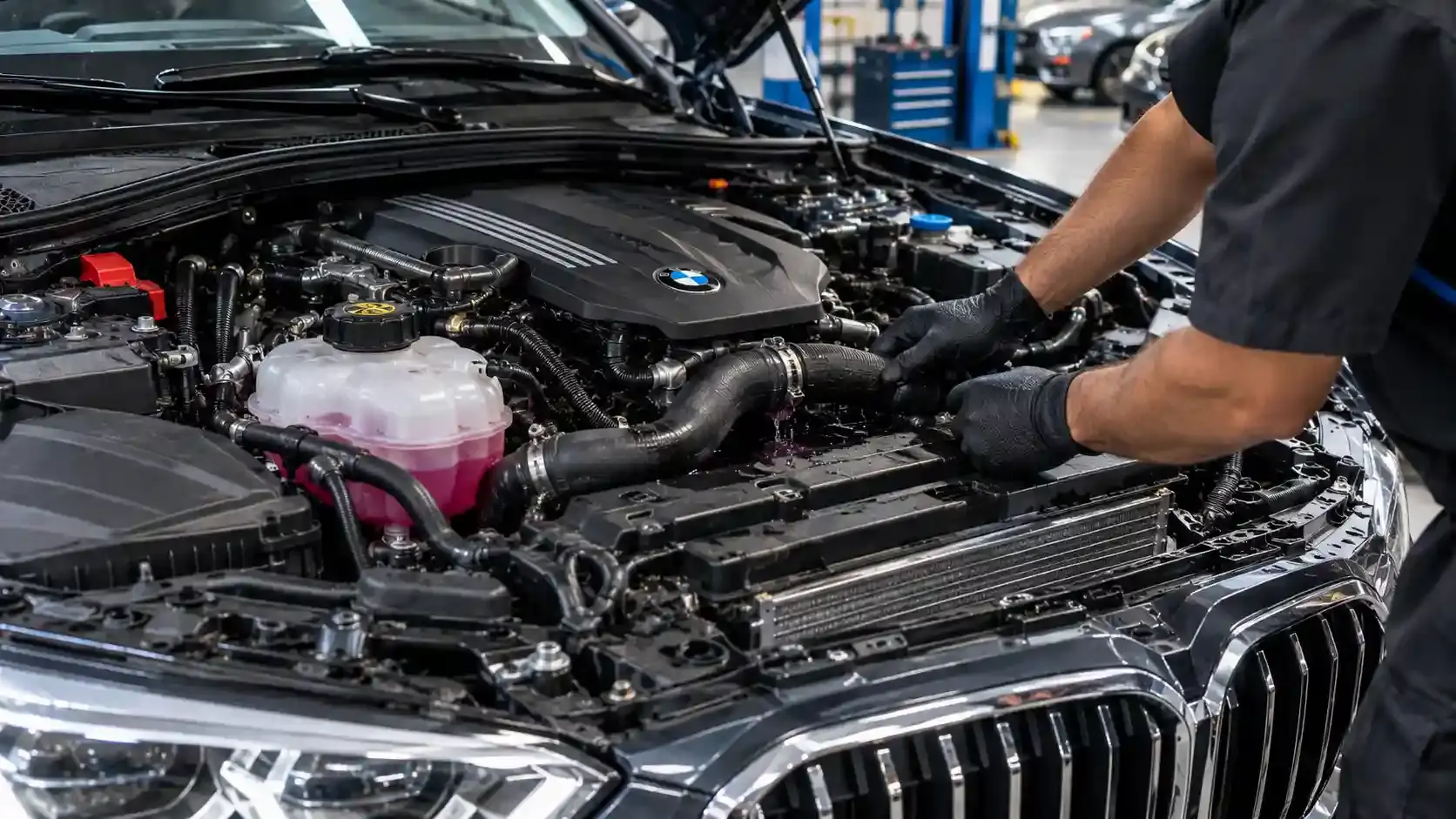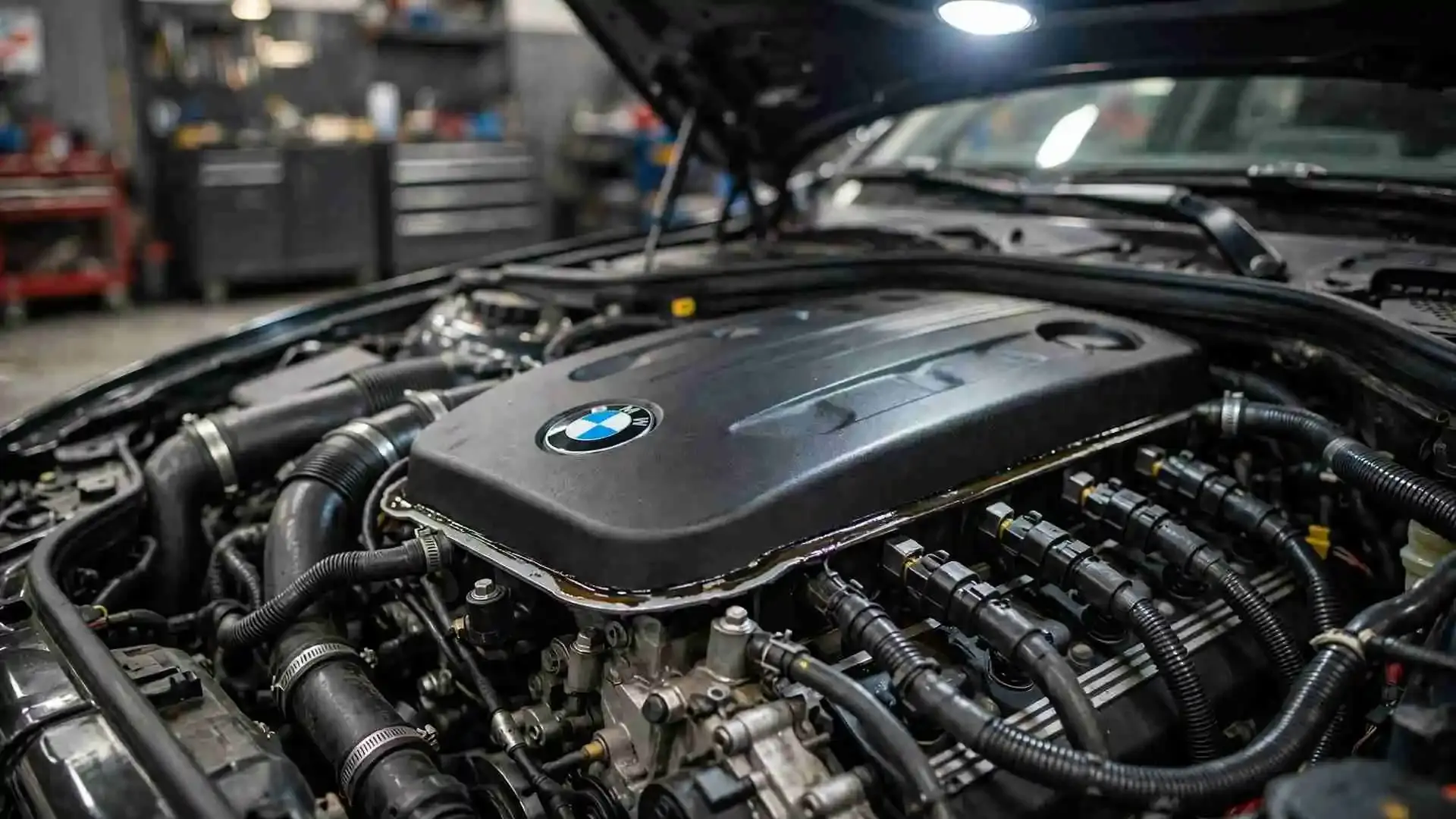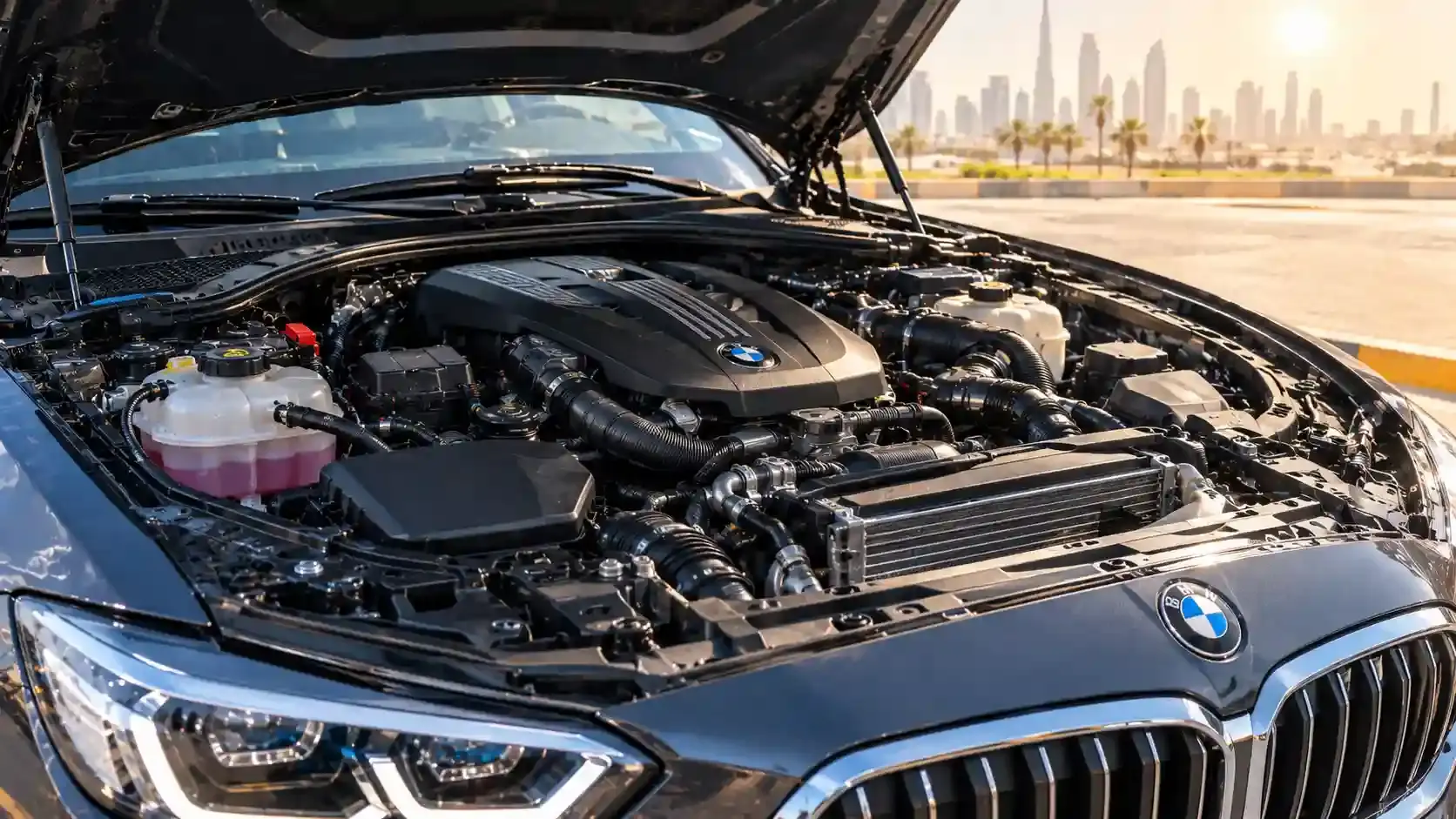
The most common BMW problems in the UAE include engine overheating, cooling system leaks, and air conditioning faults. Battery failure and electrical issues can occur, especially during periods of extreme heat.
Gearbox trouble, oil leaks, and suspension wear may affect driving comfort and performance. Brake wear and problems with sensors can lead to warning lights or changes in how the car handles.
Knowing these issues helps BMW owners spot early signs of trouble, avoid further damage, and plan repairs before a small fault becomes an expensive problem.
On this page
8 Common BMW Problems in the UAE
BMW cars use advanced engines, electronic controls, and complex cooling systems. These parts need regular checks to keep the car running well, especially in the UAE. Below are eight common issues, their possible causes, and the signs drivers should watch for.
Engine Overheating
Engine overheating is a major concern in the UAE, where summer temperatures can rise above 40°C. Long traffic jams and slow driving can make it harder for the cooling system to keep the engine at the right temperature.
A faulty thermostat, damaged radiator, failing water pump, or low coolant level may cause the temperature to rise. Watch for a high temperature warning, steam from under the bonnet, or a coolant warning light.
If the engine overheats, stop somewhere safe and switch it off. Do not open the coolant cap while the engine is hot, as pressurised coolant can cause serious burns. Have the cooling system checked before driving again.
Cooling System Leaks
BMW cooling systems help control engine temperature, but some parts can wear out over time. Plastic coolant pipes, expansion tanks, seals, and radiator connections may crack or leak.
Heat can speed up the wear of these parts, making regular checks important for cars driven in Abu Dhabi and other UAE cities. Common signs include a low coolant warning, a sweet smell near the engine, coloured fluid under the car, or repeated drops in coolant levels.
A workshop can perform a cooling system pressure test to find the leak. Replacing a damaged pipe or seal early can help prevent overheating and protect costly engine parts from heat damage.
Air Conditioning Problems
A working AC system is essential for comfortable driving in the UAE. BMW air conditioning may lose cooling power because of low refrigerant, a blocked condenser, a faulty compressor, or a problem with the cabin air filter.
Dust and sand can build up around the condenser and reduce airflow, making it harder for the system to remove heat. If the AC blows warm air, takes too long to cool the cabin, or makes unusual noises, it may need inspection.
A technician can check refrigerant pressure, inspect the compressor, and test the system for leaks. Cleaning the condenser and replacing dirty filters when needed can help the AC work more efficiently.
Battery Failure and Electrical Faults
High temperatures can shorten a car battery's service life by speeding up chemical reactions inside it. A weak battery may struggle to start the engine, especially after the car has been parked for long periods.
BMW models with many electronic features may show several warning lights when the battery voltage becomes too low. Signs of trouble include slow engine cranking, dim lights, repeated battery warnings, and electrical features that stop working properly.
However, these symptoms can also point to a faulty alternator, loose connections, or a charging system problem. A battery load test and charging system check can help identify the cause before new parts are fitted.
Gearbox and Transmission Issues
BMW automatic gearboxes are designed to deliver smooth gear changes, but wear, fluid problems, or electronic faults can affect their performance. Heavy traffic often means frequent stopping, starting, and shifting between gears.
Over time, this can add stress to the transmission, particularly if the car has not received the care required by its service schedule. Warning signs include delayed gear changes, jerking, slipping, unusual noises, or a transmission warning on the dashboard.
A technician may use diagnostic equipment to check fault codes and inspect the transmission system. The right repair depends on the cause, which could involve a sensor, fluid leak, software issue, or internal gearbox damage.
Engine Oil Leaks
Oil leaks are another issue BMW owners may face as seals and gaskets age. Common leak points can include the valve cover gasket, oil filter housing gasket, and oil pan gasket.
High engine temperatures can place extra stress on rubber seals, while worn parts may allow oil to escape over time. Look for oil spots under the car, a burning oil smell, smoke from the engine area, or a low oil warning.
Check the oil level according to the owner's manual and arrange an inspection if it keeps dropping. Low engine oil can increase friction and wear, potentially leading to serious engine damage. Repairing a leak early is usually safer and less costly than waiting.
Suspension and Steering Problems
BMW suspension systems help provide stable handling and a comfortable ride. However, worn control arm bushes, ball joints, shock absorbers, and other suspension parts can affect how the car drives.
Rough road surfaces, speed bumps, and daily use can add to normal wear, while dust and heat may affect exposed rubber parts over time. You may notice knocking sounds over bumps, uneven tyre wear, steering vibration, or a feeling that the car pulls to one side.
A workshop can inspect the suspension joints, bushes, steering parts, and wheel alignment. Replacing worn parts can improve handling and tyre life. Do not ignore steering problems, as damaged suspension parts may affect vehicle control.
Brake Wear and Sensor Faults
BMW braking systems use several parts and electronic sensors to help drivers slow down safely. Brake pads and discs wear with use, especially in stop-and-go traffic. Dust can collect around the wheels, while worn brake parts may affect braking performance. Faulty wheel speed sensors or other electronic parts can trigger warning lights even when the basic braking system appears normal.
Signs include squealing, grinding, vibration while braking, a longer stopping distance, or a brake warning light. A technician should inspect the brake pads, discs, fluid, and related sensors to find the cause. If braking feels weak or the car makes a grinding noise, avoid driving until it has been checked.
How Can You Prevent Common BMW Problems in the UAE?
Regular maintenance helps reduce the risk of sudden faults and costly repairs. The correct service plan depends on your BMW model, mileage, age, and driving conditions.
UAE drivers should pay close attention to cooling, AC performance, battery health, and engine oil because these areas can be affected by heat and daily traffic.
Follow these simple maintenance steps:
- Check coolant levelsLook for leaks and follow the coolant service guidance in your owner's manual.
- Service the AC systemInspect the cabin filter and condenser, and check cooling performance before summer.
- Test the batteryCheck battery health and the charging system, especially if the engine starts slowly.
- Change engine oil on timeUse the oil grade and service intervals recommended for your BMW.
- Inspect brakes and tyresCheck pad wear, tyre pressure, tread depth, and uneven wear.
- Pay attention to warning lightsUse proper diagnostic equipment to identify faults instead of guessing.
- Follow the service scheduleKeep records of repairs and replace worn parts before they cause further damage.
Avoid ignoring small changes in engine sound, gear shifts, steering, or AC performance. Early checks can help protect other parts and reduce the risk of a breakdown.
When Should You Visit a BMW Workshop in Abu Dhabi?
Some BMW faults need immediate attention. If the engine overheats, the oil pressure warning appears, the brakes stop working as expected, or a serious transmission warning comes on, stop driving when it is safe to do so and arrange professional help. Continuing to drive with these warnings can turn a minor fault into major damage.
For less urgent signs, such as weak AC cooling, small oil leaks, or unusual suspension noises, book an inspection soon. A trained technician can scan the car's control units, inspect mechanical parts, and explain which repairs are needed. Proper diagnosis helps avoid replacing parts that are still working and makes it easier to plan repair costs.
Conclusion
The most common BMW problems in the UAE include engine overheating, coolant leaks, weak AC performance, battery failure, gearbox faults, oil leaks, suspension wear, and brake or sensor issues.
High temperatures, dust, traffic, and normal part wear can contribute to these problems. Regular servicing and early fault checks help keep your BMW safe, reliable, and comfortable to drive.
If your BMW shows warning lights, loses power, struggles to cool the cabin, or makes unusual noises, do not wait for the issue to get worse.
Contact BMW Workshop Abu Dhabi for professional BMW diagnostics, maintenance, and repair services. Get the problem checked early to help protect your car and keep it performing well on UAE roads.